How Long Does Implantation Bleeding Last? Duration, Signs & What's Normal
How Long Does Implantation Bleeding Last? Duration, Signs, and What's Normal
You noticed some spotting and now you're wondering — is this the start of your period, or could it be something else entirely? Here's a clear, medically informed breakdown of how long implantation bleeding lasts, what it looks like, and what to do next.
In This Article
A tiny smear of pink on the toilet paper. A faint brownish spot in your underwear. Your period isn't due for a couple more days, and your mind immediately starts racing — could this be a sign of pregnancy?
If you're trying to conceive, or even if you're not, unexpected spotting can send you straight to Google. And the question you're most likely asking is: how long does implantation bleeding last?
Let's break it all down — the timing, the duration, what it looks like, and how to tell it apart from your period — so you know exactly what to expect.
What Is Implantation Bleeding?
Implantation bleeding is light spotting that can occur when a fertilized egg attaches to the lining of the uterus. As the embryo burrows into the endometrium (the blood-rich uterine wall), it may disrupt small blood vessels, releasing a small amount of blood. This is considered a normal part of early pregnancy.
The process of implantation is a critical milestone. After fertilization occurs in the fallopian tube, the resulting embryo travels toward the uterus over several days. Once it arrives, it begins embedding itself into the uterine lining — and it's this physical attachment that can cause slight bleeding.
It's worth noting that implantation bleeding is not a sign of a problem. It doesn't harm the embryo or indicate anything is going wrong with the pregnancy. According to the Cleveland Clinic, it's a common and completely benign occurrence in early pregnancy.
How Long Does Implantation Bleeding Last?
This is the big question — and the answer is reassuringly brief.
Implantation bleeding typically lasts anywhere from a few hours to 1–2 days. In some cases, it may extend to 3 days, but it should never last as long or be as heavy as a regular menstrual period.
Here's a helpful way to think about it:
Implantation Bleeding Duration Timeline
The critical distinction is that implantation bleeding does not get heavier over time. A period typically starts light, builds to a heavier flow, and then tapers off. Implantation bleeding stays consistently light — or it simply stops.
If bleeding lasts longer than 3 days, becomes progressively heavier, fills a pad or tampon, or contains clots, it is very unlikely to be implantation bleeding. This is more consistent with a period or another condition that should be evaluated by a healthcare provider.
What Does Implantation Bleeding Look Like?
Knowing the visual characteristics can help you distinguish implantation bleeding from a period or other types of spotting.
Color
Implantation bleeding is typically pink, light brown, or rust-colored. It rarely appears bright red. The brownish tint comes from the blood taking longer to travel from the uterus, which gives it time to oxidize.
Flow
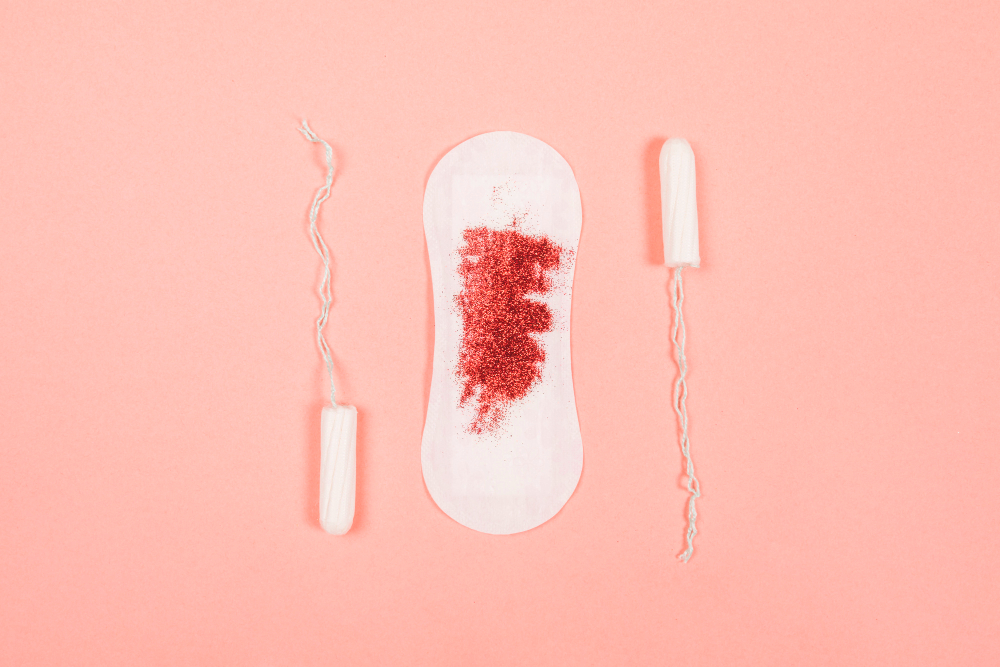
The flow is extremely light — more like spotting than actual bleeding. You might notice a few drops on toilet paper when you wipe, or a small stain in your underwear. You wouldn't soak a pad, tampon, or menstrual cup.
Consistency
Implantation bleeding does not contain blood clots. It's typically thin and watery, or may appear as a faint streak mixed with normal vaginal discharge. If you're seeing clots, that points much more strongly toward a menstrual period.
Pattern
Unlike a period, which has a recognizable flow pattern (light → heavy → light), implantation bleeding tends to be on-and-off or consistently faint. It may appear once, disappear for several hours, and show up again briefly before stopping entirely.
When Does Implantation Bleeding Happen?
Timing is one of the strongest clues when trying to determine whether spotting is implantation bleeding or an early period.
Implantation typically occurs 6 to 12 days after ovulation, once the fertilized egg has traveled from the fallopian tube and embedded in the uterine wall. For someone with a standard 28-day cycle, this means implantation bleeding could appear anywhere from day 20 to day 26 — which is often a few days before the expected period.
This overlap in timing is precisely why so many people confuse implantation bleeding with an early or light period. The key is to look at the full picture: timing plus color plus flow plus duration.
Pro tip: If you're actively tracking your cycle, note the exact day spotting begins. If it arrives 2–4 days before your expected period and is significantly lighter than your normal flow, implantation bleeding is a strong possibility.
Implantation Bleeding vs. Period: How to Tell the Difference
This is the comparison most people are searching for — and the differences, while subtle, are consistent enough to help you make an informed guess.
| Feature | Implantation Bleeding | Menstrual Period |
|---|---|---|
| Duration | A few hours to 1–3 days | 3–7 days |
| Color | Pink, light brown, rust | Bright red to dark red |
| Flow | Very light spotting only | Light → heavy → light |
| Clots | None | Common, especially days 1–3 |
| Cramping | Mild or none | Moderate to severe |
| Timing | 6–12 days after ovulation | 12–16 days after ovulation |
| Flow progression | Stays light or stops | Builds in intensity |
The single most reliable distinction: if the bleeding stays very light and resolves within a couple of days without ever requiring a pad or tampon, implantation bleeding is far more likely than a period.
How Common Is Implantation Bleeding?
Not everyone experiences it. According to the American Pregnancy Association, roughly one in four pregnant people (about 25 percent) will notice implantation bleeding. That means the majority of pregnancies begin without any spotting at all.
If you don't experience implantation bleeding, it doesn't mean anything is wrong. The absence of bleeding is completely normal and is not a sign that implantation failed.
There's also some evidence that people in their first pregnancy may notice slightly more spotting during implantation compared to subsequent pregnancies, though this varies widely from person to person.
Other Symptoms That May Accompany Implantation Bleeding
Implantation bleeding doesn't always occur in isolation. Some people report other subtle early pregnancy signs around the same time, including:
Early Signs Around Implantation
Mild cramping. Light, brief cramps in the lower abdomen — significantly milder than period cramps. Some describe it as a slight pulling or tingling sensation.
Breast tenderness. Hormonal shifts triggered by implantation can cause breasts to feel sore, swollen, or unusually sensitive.
Fatigue. Rising progesterone levels can make you feel unusually tired, even in the earliest days of pregnancy.
Mood changes. Hormonal fluctuations may cause subtle emotional shifts similar to PMS.
Nausea. While full-blown morning sickness usually arrives later, some people report mild queasiness around implantation time.
Frequent urination. Increased blood flow and hormonal changes can cause more frequent trips to the bathroom early on.
None of these symptoms alone confirm pregnancy. They can all overlap with premenstrual symptoms, which is why a pregnancy test remains the only reliable way to know for sure.
When to Take a Pregnancy Test After Implantation Bleeding
This is where patience makes a real difference in accuracy.
Home pregnancy tests work by detecting human chorionic gonadotropin (hCG), the hormone your body begins producing after the embryo implants. But hCG levels start very low and need time to build up to a detectable concentration.
If you test too soon after implantation bleeding, you're likely to get a false negative — a result that says you're not pregnant even though you may be. This happens simply because hCG hasn't accumulated enough to trigger the test.
When to Test for the Most Accurate Result
Best option: Wait until the first day of your missed period. At this point, hCG levels are typically high enough for nearly all home tests to detect. According to the American College of Obstetricians and Gynecologists, home pregnancy tests are over 99 percent accurate when used from the day your period is due.
Earlier testing: Some early-detection pregnancy tests can pick up hCG as early as 3 to 5 days after implantation bleeding stops. If you choose to test early, use your first morning urine, which is the most concentrated, for the highest accuracy.
Blood test option: A quantitative blood hCG test from your doctor can detect pregnancy as early as 3 to 4 days after implantation — earlier than any home urine test.
Testing tip: If you get a negative result but still believe you might be pregnant, wait 3 days and test again. hCG levels roughly double every 48 to 72 hours in early pregnancy, so a few extra days can make the difference between a negative and a clear positive.
Can Implantation Bleeding Be Heavy?
In general, no. Implantation bleeding is defined by its lightness. It should be minimal — far less than a typical period.
If what you're experiencing feels like a full menstrual flow, requires a pad or tampon, contains clots, or lasts beyond 3 days, it's most likely not implantation bleeding. It could be your period arriving, or it could indicate another condition worth discussing with your doctor, such as a hormonal fluctuation, cervical irritation, or early pregnancy complication.
That said, every body is different, and what feels "heavy" to one person might feel "moderate" to another. The best rule of thumb: if the amount of blood is comparable to your normal period, treat it as a period until proven otherwise by a pregnancy test.
Does Implantation Bleeding Last Longer With Twins?
This is a common question, especially for those undergoing fertility treatments where multiple embryos may be transferred.
The theory is straightforward: if two embryos are implanting separately, the process might cause more disruption to the uterine lining and potentially more bleeding. However, there is currently no strong clinical evidence confirming that twin pregnancies cause longer or heavier implantation bleeding.
Some individuals pregnant with twins do report slightly more spotting in early pregnancy, but this could be related to higher hCG levels and increased blood flow to the uterus rather than the implantation process itself. Twin pregnancies are more reliably confirmed through blood hCG monitoring (which shows higher-than-expected levels) and early ultrasound.
When to See a Doctor
Implantation bleeding itself is harmless and resolves on its own. However, not all bleeding in early pregnancy is implantation bleeding. Contact your healthcare provider if you experience:
Bleeding that lasts longer than 3 days or becomes progressively heavier; blood that is bright red and fills a pad or tampon; large or frequent blood clots; severe or one-sided pelvic pain (which could indicate an ectopic pregnancy); dizziness, fainting, or feeling lightheaded; bleeding accompanied by fever or chills; or any vaginal bleeding after a confirmed positive pregnancy test.
Any bleeding after you've confirmed a pregnancy with a test should be reported to your doctor, even if it seems minor. While spotting in the first trimester is fairly common and often harmless, it's always best to let your provider rule out complications like ectopic pregnancy, molar pregnancy, or early miscarriage.
Frequently Asked Questions About Implantation Bleeding
How long does implantation bleeding last?
Implantation bleeding typically lasts a few hours to 1–2 days. In some cases it may last up to 3 days, but it should never be as long or heavy as a regular period.
What does implantation bleeding look like?
It's usually very light spotting that is pink, light brown, or rust-colored. It doesn't contain clots and is much lighter than a typical period. You might only notice it when wiping or as a small spot in your underwear.
When does implantation bleeding happen?
It usually occurs 6 to 12 days after ovulation and conception, which often falls a few days before your expected period. For a 28-day cycle, this is roughly between days 20 and 26.
Can implantation bleeding last 5 days?
It would be very unusual. If bleeding continues for 5 days or more, or becomes heavier, it's more likely your period or another cause. Contact your healthcare provider if you're unsure.
How soon can I take a pregnancy test after implantation bleeding?
For the most accurate result, wait at least 3 to 5 days after the bleeding stops, or ideally until the first day of your missed period. Testing too early can produce a false negative because hCG levels haven't risen enough.
Is implantation bleeding a guaranteed sign of pregnancy?
No. While it can be an early indicator, light spotting can also be caused by hormonal fluctuations, cervical irritation, or other factors. A pregnancy test is the only reliable way to confirm pregnancy.
Key Takeaways
Implantation bleeding is light spotting that lasts anywhere from a few hours to about two days, caused by a fertilized egg attaching to the uterine wall. It's pink or brown in color, much lighter than a period, and occurs roughly 6 to 12 days after ovulation — often a few days before your expected period.
About one in four pregnant people will experience it, and it's completely normal. It doesn't require treatment, it doesn't harm the pregnancy, and its absence doesn't mean anything is wrong.
The most effective approach if you suspect implantation bleeding: note the date it started, observe the color and flow, wait for your expected period, and take a pregnancy test once it's due. If that test comes back positive, your next call should be to your healthcare provider to start your prenatal care journey.
Get weekly pregnancy updates
Expert tips and milestones straight to your inbox.